Barcelona's modernist architecture draws millions, yet most visitors miss its true depth. Over 80% of tourists cluster at just three sites, creating hour-long queues while equally stunning buildings sit quietly nearby. The frustration isn't just wasted time – it's returning home realizing you experienced a postcard version of Barcelona's architectural revolution. Locals know the secret: the city's 115+ modernist treasures tell a richer story when you understand their connections and hidden details. From the coded symbolism in Gaudí's tiles to Domènech i Montaner's floral pharmacies, these buildings become living history when explored with insight rather than checked off a list.
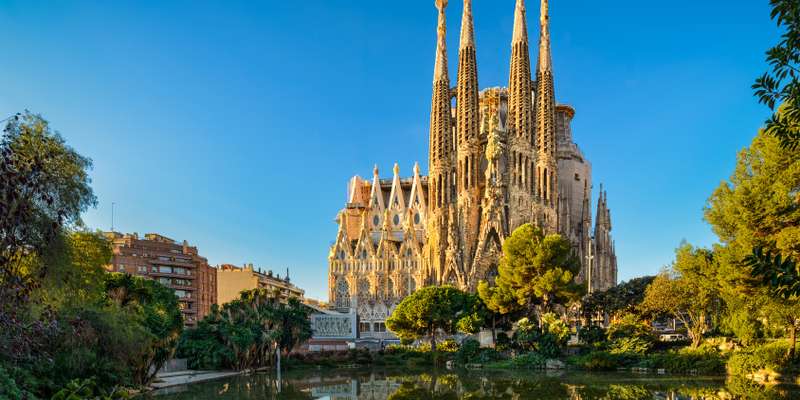
Avoiding the Gaudí gridlock – smarter routes for modernist exploration
The morning scramble at Sagrada Família creates a domino effect of crowds across Barcelona's architectural sites. Savvy travelers start their day at lesser-known marvels like Hospital de Sant Pau, where the morning light illuminates its intricate mosaics without the jostling crowds. By mid-morning, when tour buses descend on Passeig de Gràcia, slip into nearby Casa Amatller – Gaudí's neighbor often overlooked despite its chocolate shop and stained-glass surprises. This strategic sequencing isn't just about comfort; it allows you to appreciate the architectural dialogue between modernism's key figures. Notice how Domènech i Montaner's curves inspired Gaudí, visible when visited in historical rather than geographical order.
View all Tours
Decoding modernist details most visitors miss
Modernism's magic lives in the details most rush past. At Palau de la Música Catalana, look upward – the stained-glass ceiling transforms ordinary daylight into a kaleidoscope, but only if you stand directly beneath the dome's center. Casa Batlló's dragon-back roof makes sense when you spot the Saint George cross hidden in its tiles, a nod to Barcelona's patron saint. These aren't just pretty decorations; they're political statements from when Catalan identity was suppressed. Local architects embedded their heritage in floral motifs, marine forms, and mythological references. Understanding these symbols turns building-hopping into a treasure hunt where every facade tells a story.
View all Tours
Neighborhood strolls that reveal modernist secrets
Beyond the famous landmarks, entire streets whisper modernist secrets. The quiet Eixample district hides gems like Casa Thomas, where original Modernist-era pharmacies still operate behind dragon-shaped counters. Walk Carrer de València to discover 'piano buildings' – their undulating facades mimic keyboard rhythms visible only from specific angles. Even Barcelona's pavement tiles follow modernist principles; the hexagonal designs along Rambla Catalunya mirror ceiling patterns inside nearby buildings. These free discoveries reward those who wander beyond guidebook maps, offering intimate encounters with Barcelona's architectural soul without entrance fees or time slots.
View all Tours
Timing tricks for iconic sites without the stress
Sagrada Família's least crowded hours aren't at opening – locals arrive for the 4pm light show when the nave transforms into a forest of rainbows. Similarly, Park Güell's free upper section provides panoramic views without tickets, especially magical during the 'blue hour' before sunset. For Casa Milà, Wednesday evenings offer rooftop jazz with your admission, doubling the experience. These timing strategies do more than save money; they let you experience buildings as their creators intended – Gaudí designed his spaces for specific light conditions and seasonal angles that most visitors miss during peak hours.
UPDATES FOR YEAR 2026
Navigating the World Capital of Architecture: Centenary Events and Critical Entry Updates
As the designated UNESCO World Capital of Architecture, the city is undergoing its most significant cultural transformation in decades. The highlight of the calendar is the centenary of Antoni Gaudí’s passing, marked by the inauguration of the Tower of Jesus Christ at the Sagrada Família in June. This 172.5-meter spire officially makes the basilica the tallest church in the world. Visitors should be aware of two major logistical shifts: first, a significant increase in the municipal tourist tax takes effect in April, impacting per-night costs for all accommodation types. Second, the previous 'free access' zones for Park Güell have been fully integrated into the paid monumental area; you now require a pre-booked digital ticket for all sections of the park. To handle the surge of attendees for the World Congress of Architects, most modernist sites have implemented a '100% digital-only' booking policy, meaning walk-up ticket windows are effectively obsolete. For the best experience, prioritize the 'Be the First' 8:30 AM slots at Casa Batlló, which now include immersive AI-driven projections of Gaudí’s original sketches.
View all Tours
FAQ 2026
Will the Sagrada Família be fully completed in 2026?
Yes, the architectural structure and the six central towers, including the record-breaking Tower of Jesus Christ, are scheduled for completion in 2026 to coincide with the Gaudí centenary. While some decorative interior work and the Glory Façade stairway will continue beyond this date, the main silhouette of the building is now officially finished.
What are the new Barcelona tourist tax rates for 2026?
Starting in April 2026, the city has implemented a scheduled increase in the municipal surcharge. Travelers should budget for a total tax (combining the regional and city levies) ranging from approximately €5.25 to €7.50 per person, per night, depending on the hotel category, with higher rates for luxury stays and cruise passengers.
Is it still possible to visit Park Güell for free in 2026?
No, free access to the upper forest zones is now strictly reserved for local residents and registered 'Gaudir Més' members. For all international tourists, a mandatory entrance fee (currently approximately €10–€15) applies to the entire park area, and tickets must be purchased online in advance as there are no on-site ticket offices.
Written by Barcelona Tours Editorial Team & Licensed Local Experts.
Last updated: 24/02/26
