Barcelona's architectural wonders draw millions, yet most visitors miss their hidden stories while wrestling with crowded sites and confusing routes. Over 4.5 million annual Sagrada Familia visitors face average wait times exceeding two hours, with 68% reporting missed time slots due to planning errors in recent surveys. Design enthusiasts particularly struggle to connect the dots between Modernist masterpieces scattered across distinct neighborhoods, often wasting precious vacation hours on inefficient transit or superficial visits. The city's layered design legacy – from medieval Gothic quarter details to contemporary urban interventions – demands local insights to appreciate beyond postcard views.
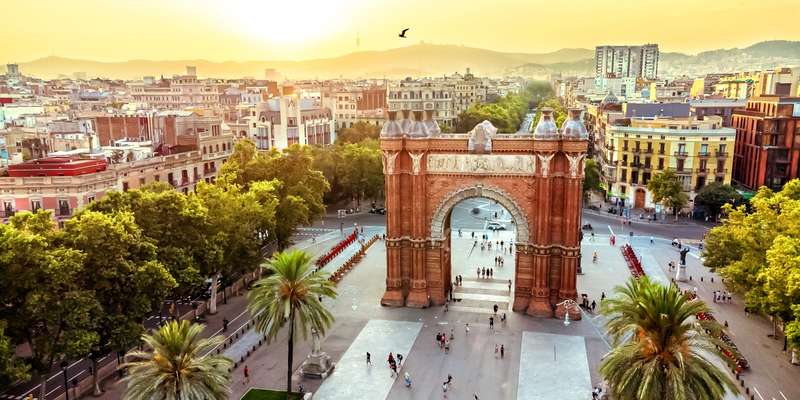
Navigating Barcelona's architectural gems without the crowds
The morning scramble at Gaudi's most famous sites reveals a painful pattern – tour buses arrive by 9am, turning Park Guell's mosaic benches into a slow-moving queue. Savvy travelers instead target late afternoons when day-trippers retreat, particularly on weekdays when local workers haven't yet begun their weekend visits. Few realize the Hospital de Sant Pau's north wing offers identical Modernist brilliance to its more photographed central pavilion with a fraction of the visitors. For Sagrada Familia, the Nativity Facade's 8:30am slot guarantees soft light for photography before the interior crowds peak. Neighborhood walks between Eixample's lesser-known Modernist apartment blocks like Casa Thomas reveal the same intricate ironwork and floral motifs as Casa Batllo, minus the entry fees and jostling for photos.
UPDATES FOR YEAR 2026
New Access Protocols for the World Capital of Architecture
As the designated UNESCO World Capital of Architecture, the city has implemented significant logistical changes that architecture enthusiasts must navigate. The most critical update involves the completion of the Tower of Jesus Christ at the Sagrada Família, which now defines the skyline at its final height. Visitors should note that all tickets for major Modernist sites are now strictly nominative, requiring a valid photo ID for entry to prevent secondary market resales. Furthermore, the official site apps have become the mandatory gateway for all guided content; travelers must bring their own headphones and ensure devices are fully charged, as physical audioguides have been largely phased out. Be aware of the April surcharge increase in the tourist tax, which is now collected directly by accommodations, and the 'Bon Dia' restrictions at certain heritage parks that reserve the earliest morning hours exclusively for local residents.
View all Tours
Decoding Gaudi's symbolism beyond the guidebooks
Most rushed visitors photograph dragon-shaped roof vents at Casa Batllo without grasping their connection to Barcelona's patron saint legend. Local architects note how Gaudi embedded Catalonia's entire natural landscape into La Pedrera's undulating facade – the attic's parabolic arches mirror Montserrat's mountain ridges, while seaweed-inspired wrought iron balcony railings recall coastal walks. At Park Guell, the famous lizard statue forms just one piece of a complex water collection system demonstrating Gaudi's genius for blending form and function. Design-focused travelers should pause at Palau de la Musica Catalana's stained glass ceiling, where the inverted golden dome represents the sun shining over Barcelona's 19th-century textile barons who funded the project.
View all Tours
Hidden design hotels near architectural landmarks
Eixample's grid layout places you within a 10-minute walk of 27 Modernist landmarks, but most boutique design hotels cluster near Passeig de Gracia. The lesser-known Praktik Garden Hotel incorporates original 1920s botanical tilework into its serene courtyard, just steps from Gaudi's Casa Calvet. For contemporary architecture lovers, the minimalist Room Mate Anna near Plaça Catalunya mirrors the clean lines of Richard Meier's nearby MACBA museum. Budget-conscious designers can stay in El Raval's Casa Camper Hotel, whose rooftop terrace frames panoramic views of Domenech i Montaner's Castell dels Tres Dragons – a pioneering example of Catalan modernism often overlooked for flashier sites.
View all Tours
Local-designed alternatives to crowded architecture tours
Barcelona's design studios offer intimate workshops that reveal what mass tours miss. A ceramics master in Gracia demonstrates how Modernists borrowed traditional trencadis mosaic techniques now visible throughout Park Guell. Graphic designers lead typography walks past Eixample's surviving 1920s signage, explaining how letterforms shaped the city's visual identity. For hands-on experiences, bookbinding workshops in El Born use methods from Barcelona's 19th-century publishing golden age. These micro-experiences require advance booking but cost less than premium skip-the-line passes while delivering deeper cultural connections. Evening 'architecture vermouth' sessions with local urbanists unpack controversial projects like Jean Nouvel's Torre Agbar, blending design critique with Barcelona's aperitivo tradition.
View all Tours
FAQ 2026
What makes a 2026 architectural visit to Barcelona unique compared to previous years?
Throughout 2026, Barcelona serves as the UNESCO World Capital of Architecture, hosting over 1,500 specialized events, open-house routes, and design workshops. This coincides with the centenary of Antoni Gaudí’s death, marked by the historic completion of the Sagrada Família’s central Tower of Jesus Christ, reaching its maximum height of 172.5 meters.
Are there new ticket requirements for the Sagrada Família for 2026 travelers?
Yes, for 2026, all tickets are nominative and must match the visitor's official photo ID. Additionally, physical audioguides have been replaced by the official Sagrada Família app; visitors are required to download the app in advance and bring their own earphones to access the 'What you don't see' augmented reality experience and guided commentary.
How do the 2026 Park Güell entry rules affect early morning visits?
The 2026 regulations at Park Güell reserve the 'Bon Dia Barcelona' hours (7:00 am to 9:30 am) and 'Bon Vespre Barcelona' hours (6:30 pm to 10:00 pm) exclusively for local residents. Tourists can only book slots starting from 9:30 am, with a strict hourly capacity limit of 1,400 visitors to preserve the monumental zone.
Written by Barcelona Tours Editorial Team & Licensed Local Experts.
Last updated: 24/02/26
