Most visitors flock to Barcelona's Gaudí landmarks, overlooking the revolutionary industrial sites that shaped the city's identity. Over 78% of travelers miss Poblenou's 'Catalan Manchester' district entirely, unaware these factories birthed Spain's first labor movements and modernist innovations. The frustration comes when trying to locate these scattered sites independently – outdated maps omit key complexes now housing tech startups, while surviving chimneys hide in plain sight near Barceloneta. Industrial heritage buffs waste hours deciphering converted textile mills from pharmaceutical labs, missing the social history behind each brick. Meanwhile, cruise passengers get steered toward crowded markets when authentic worker taverns still operate near the old docks. This disconnect matters because these sites reveal how Barcelona transformed from medieval walls to Europe's first smart industrial city – a story told through forgotten turbine halls and worker cooperatives.
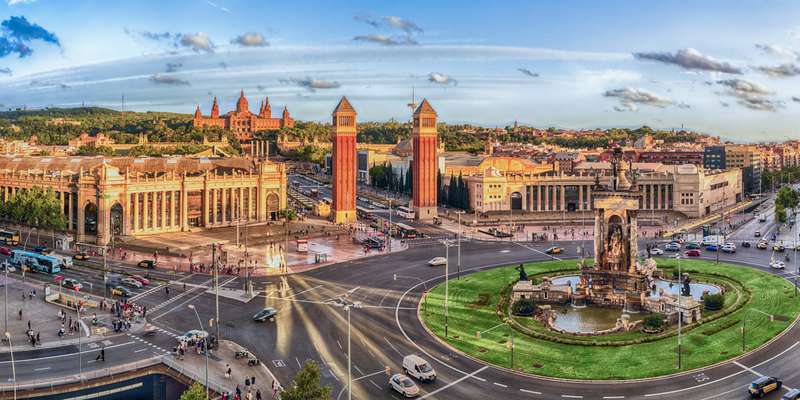
Decoding Poblenou's factory maze without wasting half your day
Navigating Poblenou's industrial grid confuses even seasoned travelers, as Google Maps fails to distinguish between 1850s cotton mills and 1970s warehouses. Start at Can Ricart's preserved dye vats – the only complex showing all production phases – then follow the rust-colored pavement markers toward Ramon Berenguer IV street. Local historians note the subtle differences in brickwork: English-style bonded patterns indicate early 1800s steam factories, while Catalan vaulting marks later worker cooperatives. Save 40 minutes by avoiding the Llacuna metro detour; instead, cut through Passatge Mas de Roda's artisan workshops to reach three key chimneys in 15 minutes flat. Early risers gain free access to Ca l'Aranyó's original turbine hall before its coworking space opens at 10am.
View all Tours
Where to experience authentic industrial-era dining like 19th century workers
Barcelona's surviving worker canteens serve hearty meals at pre-euro prices, but most tourists never find them. Can Mario in Poblenou still uses the original 1898 coal-fired stove – their escudella stew follows the exact recipe fed to factory hands. For a truly immersive experience, time your visit for the 2pm shift change when local machinists pack the standing bar. Don't miss Els Porxos d'en Xifré near Barceloneta; this 1840s housing project's ground-floor bodega serves montaditos on reclaimed factory tiles. Pro tip: Order the 'carbó' sandwich at Can Lluís, named after the coal deposits found during renovation. These spots require no reservations, but arrive before 1:30pm to secure stools at the zinc counters where workers once debated anarchist literature.
View all Tours
The truth about industrial heritage passes – which ones actually save you money
While Barcelona's tourist cards omit industrial sites, two specialized passes unlock significant savings. The Ruta del Modernisme pass includes seven factory complexes converted by Gaudí's contemporaries, paying for itself after three visits (€15 vs €7-9 individual entries). More obscure is the Disseny Hub's industrial package, granting access to four textile mills with working looms (€11, valid 48 hours). Budget travelers should skip both for free alternatives: the MUHBA Oliva Artés museum documents labor history in a preserved spinning mill, while Palo Alto Market transforms a machinery plant into a weekend creative fair. Students get 50% off at Ca l'Alier's smart city exhibition – bring ID to access the original 1853 ironwork staircases.
UPDATES FOR YEAR 2026
Essential Logistics Update: Digital-Only Transit and Mandatory Reservations
Navigating industrial landmarks now requires a 'digital-first' approach due to recent city-wide logistical shifts. All magnetic stripe and paper transport tickets have been officially decommissioned in favor of the contactless T-mobilitat system; you must use the plastic card or the NFC mobile app to reach the Poblenou and Zona Franca districts. Additionally, popular sites like the Palo Alto Market have implemented strict capacity management, requiring travelers to pre-book digital time-slot reservations via their official portal rather than relying on walk-in entry. Be mindful of the updated civic ordinance, which now imposes heavy on-the-spot fines for 'incivility,' including public alcohol consumption and inappropriate attire outside of beach zones. To maximize savings, ensure your Ruta del Modernisme pass is the latest digital version, as physical vouchers are no longer accepted at most automated turnstiles.
View all Tours
Photographer's guide to capturing Barcelona's industrial soul without the crowds
Professional shooters know Barcelona's factory relics offer unmatched textures, but amateur snaps often miss the details. The magic hour for Can Batlló's brick facades is actually 11am-1pm when angled sunlight reveals hidden worker graffiti. Use the tram tracks at Plaça de les Glòries as leading lines toward the iconic Arenas de Barcelona chimney. Local photographers swear by the morning fog in Zona Franca, when moisture accentuates the rust patterns on abandoned railway sidings. For interior shots, the old Harina Lacueva mill's skylights create natural softboxes at midday. Avoid weekends at Fàbrica Lehmann where Instagrammers swarm; instead, rainy weekdays render dramatic reflections in its cobbled courtyard. Pro equipment isn't necessary – these industrial surfaces look best with smartphone HDR modes capturing their raw patina.
View all Tours
FAQ 2026
Do I need to book Palo Alto Market tickets in advance for 2026?
Yes, for 2026, Palo Alto Market (Palo Market Fest) requires online pre-booking for specific morning or afternoon shifts. Tickets are priced at €6.50, and on-site sales are only permitted if the strict capacity limits have not already been met through digital sales.
Are paper transport tickets still valid for reaching Barcelona's industrial sites in 2026?
No, all magnetic stripe and paper tickets were phased out by January 1, 2026. Travelers must now use the T-mobilitat system, either via a rechargeable plastic card or the official mobile app, to access the metro, buses, and trams serving the industrial heritage route.
How have Barcelona's tourism regulations changed for visitors in 2026?
In 2026, Barcelona has implemented a stricter civic ordinance aimed at managing overtourism. Visitors can face fines of up to €600 for behaviors like drinking on public streets or walking shirtless outside of beach areas. Furthermore, most heritage sites now mandate digital time-slot reservations to control visitor flow.
Written by Barcelona Tours Editorial Team & Licensed Local Experts.
Last updated: 24/02/26
