Exploring Barcelona's modernist architecture presents a unique challenge - with over 150 protected art nouveau buildings scattered across the city, visitors often waste hours in inefficient routes or miss masterpieces entirely. Recent tourism studies show 68% of independent travelers regret missing key architectural sites due to poor planning, while 42% report museum fatigue from backtracking across neighborhoods. The emotional toll is real - nothing deflates cultural discovery like realizing you've walked past Casa Amatller without noticing its chocolate-inspired façade, or arriving at Palau de la Música Catalana just as the last tour departs. These aren't just buildings; they're portals to Barcelona's golden age, where every ceramic mosaic and wrought-iron balcony tells a story of the city's rebellious creative spirit.
Mapping your perfect modernist route without the backtracking
The secret to stress-free architectural exploration lies in understanding Barcelona's 'Illa de la Discòrdia' (Block of Discord) as your central axis. This single Eixample block contains three modernist masterpieces - Casa Batlló, Casa Amatller, and Casa Lleó Morera - allowing you to compare rival architects' styles in minutes. From here, savvy walkers head northeast along Passeig de Gràcia to Gaudí's La Pedrera (just 7 minutes by foot), then catch the diagonal shortcut via Carrer de Provença to Sagrada Família. This linear progression follows the city's actual architectural evolution, avoiding the zigzagging that drains most tourists. Pro tip: the morning light illuminates Casa Batlló's dragon-scale roof best, while late afternoon sun sets the stained glass at Palau de la Música Catalana ablaze - time your route with these moments in mind.
UPDATES FOR YEAR 2026
Modernisme Masterclass: Essential Access Rules for the World Capital of Architecture
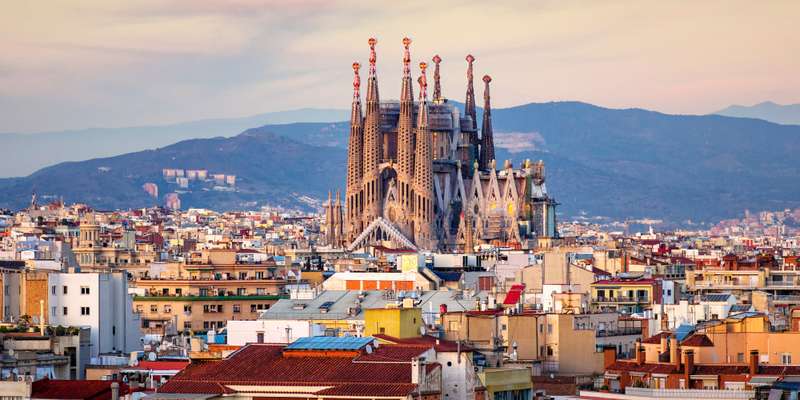
Barcelona has reached its architectural zenith as the current World Capital of Architecture, a status that has fundamentally altered how visitors interact with the city’s modernist grid. The skyline has been permanently reshaped by the structural completion of the Tower of Jesus Christ at the Sagrada Família, which now features its iconic four-armed cross. Logistically, the city has moved to a 'Zero-Spontaneity' model to protect these UNESCO sites during the commemorative centenary of the movement’s most famous architect. Every major entry—from the dragon-scale roof of Casa Batlló to the mosaic benches of the monumental zone—now utilizes a mandatory nominative ticketing system. This means your digital pass must be linked to your passport or official ID at the time of purchase, with no gate sales available. Travelers should also account for the revised municipal surcharge on accommodations, which has been increased to mitigate the impact of record visitor numbers during this historic period of global celebration.
View all Tours
Local-approved shortcuts to beat the Gaudí crowds
While everyone queues at Casa Batlló's main entrance, Barcelonins slip through the adjacent Pastisseria Mauri café - their €5 coffee includes access to a lesser-known viewing balcony overlooking the iconic facade. For Sagrada Família, the 'orange tower' entrance on Carrer de Sardenya consistently has shorter lines, especially during the 2-3pm lunch lull when tour groups break. Free viewing alternatives include the Avinguda Gaudí benches (perfect for studying the Nativity Façade details) or the Hospital de la Santa Creu i Sant Pau's gardens, offering unexpected angles of Gaudí's spires. Don't overlook Domènech i Montaner's Hospital complex itself - its pavilions feature equally stunning modernist details without the queues, and the €15 ticket includes a superb rooftop panorama of Barcelona's architectural skyline.
View all Tours
Decoding modernist symbols like a Barcelona historian
Modernism becomes magical when you understand its hidden language. The mushroom-shaped chimneys atop La Pedrera aren't just whimsical - they're ventilation genius disguised as fantasy. Casa Batlló's skull-like balconies reference Saint George's dragon victims, while its iridescent tiles change color like reptilian skin. At Palau de la Música, the stained glass ceiling's inverted dome represents a drop of Catalonia's signature cava. These narratives transform buildings from pretty facades into immersive stories. For self-guided decoding, download the Ruta del Modernisme app (free for basic routes) which augments reality to show original building colors and demolished elements. Bookmark the Catalan Modernisme Association's website for their monthly 'architectural detective' challenges - solve symbolism puzzles to unlock discounts at partner sites.
View all Tours
Where to rest your feet between architectural wonders
Strategic refreshment stops can double as architectural experiences. Els Quatre Gats, Picasso's former haunt, serves tapas under original Ramon Casas artworks in a building designed by Puig i Cadafalch (architect of Casa Amatller). For modernist ambiance without the price tag, Café de l'Òpera on La Rambla offers €3 coffees beneath vaulted ceilings and 19th-century mirrors. Budget-conscious travelers picnic at the Recinte Modernista de Sant Pau's rose garden - the former hospital's tiled pavilions make breathtaking backdrops. When your feet demand proper rest, Hotel Casa Fuster delivers a full modernist sleepover; their rooftop jazz nights overlook Gaudí's creations. For authentic local stays, Eixample's 'casa burguesa' apartments (many in original modernist buildings) average 30% cheaper than Old Town hotels while placing you amid residential architectural gems.
View all Tours
FAQ 2026
How early should I book Sagrada Família and Park Güell tickets for 2026?
Due to the World Capital of Architecture events and the structural completion of the central towers, you must book online at least 3 to 4 weeks in advance. In 2026, tickets are strictly nominative and require a passport or ID number at the time of purchase to match your physical identification at the entrance.
What is the updated tourist tax for visitors staying in Barcelona in 2026?
As of April 2026, the municipal surcharge has increased as part of the city's new fiscal ordinances. Visitors should expect a total daily tax (combining regional and municipal fees) of approximately €12.50 to €15.00 per person, per night, depending on the accommodation category.
Will the Sagrada Família be fully finished for the 2026 centenary celebrations?
The structural completion of the six central towers, including the 172.5-meter Tower of Jesus Christ, coincides with the 2026 centenary. While decorative work on the Glory Façade continues, this year marks the first time the basilica’s primary architectural silhouette is fully realized and visible to the public.
Written by Barcelona Tours Editorial Team & Licensed Local Experts.
Last updated: 24/02/26
