Barcelona’s magic amplifies at dusk, but most travelers miss its best twilight vistas by sticking to packed tourist routes. Over 72% of visitors cluster around La Rambla after dark, unaware that quieter, equally stunning alternatives exist just blocks away. The frustration of navigating crowded lanes or missing golden-hour photo opportunities at Barceloneta Beach is real—especially when limited vacation time ticks away. Evening cyclists face unique challenges: poorly marked bike lanes that vanish near monuments, unreliable rental shop hours, and safety concerns about riding after dark. Yet those who crack the code discover a transformed city where medieval alleys glow amber and waterfront breezes carry the scent of pine from Montjuïc. This isn’t about generic ‘bike path’ advice; it’s about accessing the routes locals use for their nightly paseo en bici.
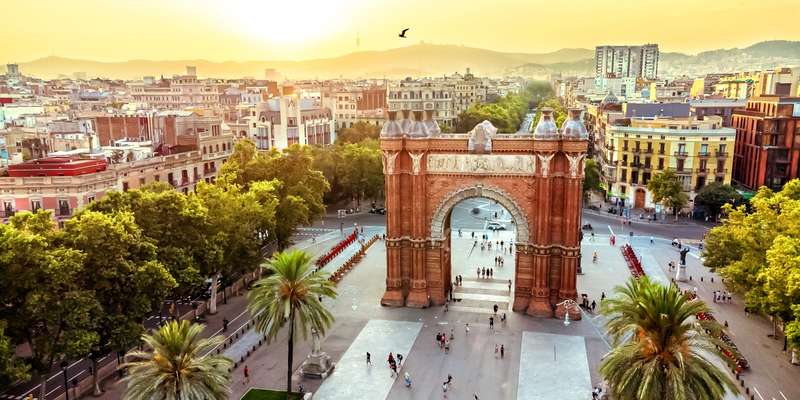
Avoiding the crowds: Secret lanes through the Gothic Quarter
The Gothic Quarter’s narrow streets become congested with foot traffic by sunset, but parallel routes like Carrer de la Dagueria offer equally atmospheric cycling without the bottlenecks. This 14th-century thoroughfare—wide enough for bikes but ignored by tour groups—connects to Plaça Sant Felip Neri, where floodlit baroque facades create a cinematic backdrop. Local riders time their journeys to catch the 8:30 PM bell toll at the Cathedral; the sound reverberates through car-free alleys like Baixada de Santa Eulàlia. For a stress-free ride, stick to the ‘Green Axis’—a local term for the continuous bike route from Plaça Reial to Via Laietana using subtle elevation drops instead of crowded main paths. Remember: cobblestones here are smoother near building edges where centuries of foot traffic wore them down.
UPDATES FOR YEAR 2026
Mandatory Safety Laws and New 'Superblock' Navigation
Navigating Barcelona by bike at night has become significantly more regulated following the implementation of the newest General Traffic Regulations. To avoid on-the-spot fines, cyclists must ensure their bikes are equipped with functioning white front and red rear lights, and they are now required to wear a reflective garment visible from 150 meters. The city has also finalized the 'Superilla' (Superblock) network expansion, particularly in the Eixample district. On these newly transformed 'Green Axes' like Consell de Cent, through-traffic is restricted, but cyclists must respect a strictly enforced 10km/h speed limit in shared pedestrian areas. Most importantly, the previous tolerance for sidewalk riding has ended; cycling on any pavement not explicitly marked as a shared lane now carries a penalty of up to €500.
View all Tours
Coastal gold: Timing your Barceloneta Beach ride perfectly
Most cyclists hit Barceloneta’s promenade at sunset, only to find it packed with pedestrians. Savvy riders wait until 30 minutes after official sundown when the crowds disperse but the horizon still glows electric blue. The key is starting at Port Olímpic’s northern end, where dedicated bike lanes run flush against the marina—this 1.5km stretch to Hotel W has minimal foot traffic even in peak season. Local fishing crews return around this time, meaning you’ll pedal past fresh catch deliveries at Punta Barceloneta while salt-kissed breezes roll in. For photography stops, the wooden boardwalks near Platja del Bogatell provide stable bike parking with unobstructed sea views. Pro tip: Wednesday evenings are ideal as midweek beachgoers thin out, and the nearby Barceloneta market stalls stay open late for impromptu picnic supplies.
View all Tours
Montjuïc’s car-free descent: Nighttime views without the climb
While most guides recommend cycling up Montjuïc at dusk, locals know the real magic happens on the descent after dark. From 9 PM, private vehicle access to the castle road is restricted, creating a serene 3km downhill glide with panoramic city lights. Start at Mirador del Migdia—a hidden terrace with picnic tables—and follow the smooth tarmac past the Joan Miró Foundation, where motion-activated path lighting illuminates your way. The route’s 7% gradient requires minimal pedaling; just control your speed through the gentle curves near Poble Sec. This after-hours approach solves two problems: avoiding daytime heat on the climb and bypassing the crowded cable car line. For safety, attach a basic bike light (rental shops provide them free with evening bookings) and watch for the occasional night jogger sharing the lane.
View all Tours
Eixample’s illuminated grid: Modernist architecture by bike light
Barcelona’s Eixample district transforms into an open-air gallery at night, with spotlit Modernist buildings like Casa Batlló creating dramatic backdrops for evening riders. The key is following the ‘Diagonal Light Route’—a local-designed 5km loop along Avinguda Diagonal’s protected bike lanes, then cutting inward to see lesser-known gems like Casa Thomas. Unlike daytime rides, nighttime allows you to park directly in front of monuments for photos since delivery traffic subsides after 8 PM. For optimal lighting, time your ride between 9-10 PM when building facades are illuminated but restaurant crowds haven’t yet spilled onto bike lanes. Free city-produced maps at tourist offices highlight which blocks have the smoothest pavement—critical given Eixample’s occasional construction zones. Those preferring guidance can join small-group architecture rides that include insider stops like rooftop bike parking at Illa Diagonal shopping center.
View all Tours
FAQ 2026
What are the mandatory light and reflective gear requirements for night cycling in Barcelona in 2026?
Starting in 2026, the DGT requires all cyclists to use a steady white front light and a red rear light between sunset and sunrise. Additionally, you must wear a reflective vest or garment that makes you visible from a distance of at least 150 meters to avoid fines that can reach €200.
Is it legal to cycle on sidewalks in Barcelona during the 2026 season?
No, in 2026, cycling on sidewalks is strictly prohibited across Barcelona to protect pedestrians, with exceptions only for children under 12. Unauthorized sidewalk riding is a major focus for local police and can result in a fine of up to €500.
What are the bicycle speed limits within Barcelona’s Superblock (Superilla) zones in 2026?
Within the interior 'green streets' of a Superblock in 2026, the speed limit for bicycles is capped at 10km/h to ensure a safe environment for residents and pedestrians. On standard dedicated bike lanes outside these zones, the maximum speed remains 25km/h.
Written by Barcelona Tours Editorial Team & Licensed Local Experts.
Last updated: 24/02/26
