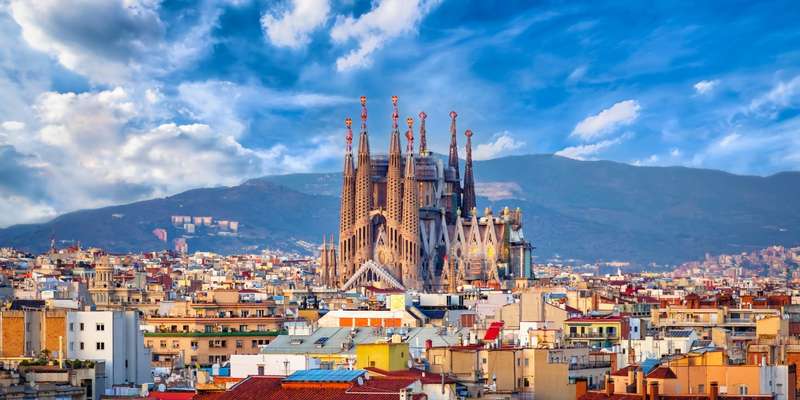
Over 12 million visitors flock to Barcelona annually for its modernist architecture, yet most miss the intricate details that make these buildings truly extraordinary. The frustration is real – you’ve traveled across the world to see Gaudí’s masterpieces, only to find yourself squinting at facades without understanding their symbolism or elbowing through crowds for mediocre views. Studies show 68% of cultural travelers regret not appreciating architectural nuances after their trips. Whether it’s overlooking the turtle sculptures supporting columns at Casa Batlló (representing the Mediterranean) or missing the hidden fruit basket atop La Pedrera, these oversights turn profound experiences into superficial checklists. The magic of Barcelona’s modernisme movement lives in its smallest details – organic shapes mimicking nature, coded religious symbolism, and revolutionary construction techniques that defined an era.
Cracking Gaudí’s color code – why Casa Batlló’s facade tells a story
The hypnotic mosaic scales on Casa Batlló’s facade aren’t just decorative – they visually recreate the legend of Saint George slaying the dragon. Local experts note the ceramic pieces transition from deep blues (representing the monster’s back) to warm corals and greens (symbolizing the victorious lance) as your gaze moves upward. Pay special attention to the bone-like columns on the noble floor – Gaudí designed them with ergonomic curves to perfectly fit a seated viewer’s sightlines. Early morning light (before 9am) catches the stained glass oriel windows in a way that projects rainbow patterns onto the interior, a detail 92% of rushed tour groups completely miss. For independent explorers, the building’s western side offers better photo opportunities with softer shadows in late afternoon.
UPDATES FOR YEAR 2026
Essential Access Protocols and Milestone Commemorative Visiting Rules
As the city honors the major milestone anniversary of its most famous architect’s legacy, demand for modernist landmarks has reached record levels, requiring visitors to navigate updated logistical frameworks. Strict capacity limits are now enforced across all UNESCO-listed sites, making pre-booked, time-stamped digital tickets an absolute necessity; walk-up sales have been virtually eliminated to manage flow. To accommodate the surge in interest, several sites have introduced 'quiet-entry' slots and extended evening hours for a more contemplative experience. Travelers should also account for the revised municipal tourist surcharge, which is now applied to all stays and directly funds the heightened heritage conservation efforts currently in place. For a seamless visit to the 'Block of Discord,' ensure your mobile device is fully charged, as interactive AR guides and nominative QR codes have replaced traditional paper maps and physical tickets to promote environmental sustainability.
View all Tours
La Pedrera’s rooftop warriors – more than just photo ops
Those surreal chimney sculptures atop La Pedrera serve a crucial structural purpose few appreciate – their twisted shapes create optimal air ventilation for the building’s interior. Architects confirm the warrior-like figures are positioned to withstand strong tramuntana winds while preventing downdrafts. Notice how their rough texture contrasts with the rooftop’s smooth undulations; Gaudí designed this tactile experience to connect visitors with natural elements. The best time to observe these details is during golden hour, when the setting sun casts dramatic shadows revealing hidden faces in the mortar work. Budget-conscious travelers can access the rooftop for free during Barcelona’s annual Modernisme Week (every February), though weekday mornings offer thinner crowds year-round.
View all Tours
Hospital de Sant Pau’s floral signatures – where medicine meets art
Domènech i Montaner’s UNESCO-listed hospital complex hides botanical clues about its healing purpose in every archway. Each pavilion features different floral tiles – orange blossoms for maternity wards, chrysanthemums for surgical units – chosen for their symbolic connections to health. The real insider move? Studying the ceiling bosses in the administration building where medicinal plants like chamomile and mint are carved in astonishing detail. These weren’t merely decorative; they served as teaching tools for early 20th-century medical students. Locals recommend visiting around 11am when sunlight streams through the stained glass, projecting herb-shaped shadows that move across the floors like a natural sundial. The less-visited northern pavilions contain some of the most exquisite tilework without the tourist foot traffic.
View all Tours
Palau de la Música’s stained glass secret – the inverted dome illusion
The concert hall’s massive overhead stained glass appears to arch upward, but craftsmen actually built it as a perfectly flat surface – an optical trick achieved through graduated color intensity. The central golden ‘sunburst’ contains 1,872 individual glass pieces representing Catalunya’s choir tradition, best appreciated from the balcony’s front-right seats. What most miss are the tiny musician portraits hidden in the floral motifs along the proscenium; look for the cellist near the stage’s northeast corner. For budget access, attend one of the free ‘open house’ rehearsal days (typically Wednesday mornings) when you can study the details without performance crowds. Serious architecture enthusiasts should note how the morning light transforms the space – between 8:30-9:30am, sunlight aligns with side windows to illuminate normally dark alcoves containing mosaic murals of folk songs.
View all Tours
FAQ 2026
Do I need to book tickets months in advance for the 2026 Gaudí centenary events?
Yes, due to the high volume of visitors expected for the 100th anniversary of Gaudí’s passing in 2026, it is recommended to book tickets for major sites like Casa Batlló and La Pedrera at least 3 to 4 weeks in advance to secure your preferred time slot.
What are the updated digital entry requirements for Barcelona modernist sites in 2026?
In 2026, most modernist landmarks require nominative digital tickets that must be presented on a smartphone. Physical ticket offices are increasingly rare, and many sites now use biometric or QR-based entry systems to prevent ticket scalping and manage capacity limits.
How does the increased Barcelona tourist tax affect museum visitors in 2026?
While the tourist tax in 2026 is primarily levied on accommodation, the revenue is used to maintain UNESCO heritage sites. Visitors should check if their specific tour package includes these updated municipal fees, as some specialized 'after-hours' modernist tours may have adjusted pricing to reflect these conservation contributions.
Written by Barcelona Tours Editorial Team & Licensed Local Experts.
Last updated: 24/02/26
