Barcelona’s modernist architecture draws millions, yet most visitors cluster at the same overcrowded sites while missing equally stunning works just blocks away. Over 80% of tourists spend their entire architectural exploration in just two locations – La Sagrada Família and Park Güell – creating bottlenecks where wait times exceed two hours. This leaves travelers frustrated by rushed visits and unaware that the city holds 150+ modernist treasures, many with no queues and lower entry fees. The challenge isn’t finding modernist buildings, but knowing which neighborhoods offer the best concentration of accessible masterpieces beyond the postcard spots. Locals have quietly preserved art nouveau pharmacies, tile-covered mansions, and floral street lamps in walkable districts where architecture blends with daily life. Understanding these hidden corridors transforms a stressful checklist into a relaxed discovery of Catalonia’s golden age.
Why Eixample beats the Gothic Quarter for modernist wonders
While the Gothic Quarter charms with medieval streets, Eixample’s grid layout was designed specifically to showcase modernist brilliance. This planned expansion district became a canvas for Gaudí and his contemporaries, featuring over 70 protected buildings within 20 blocks. The Block of Discord alone presents three competing masterpieces – Casa Batlló’s dragon scales, Casa Amatller’s stepped gable, and Casa Lleó Morera’s sculpted florals – all visible for free from the sidewalk. Unlike the cramped Gothic Quarter, Eixample’s wide sidewalks allow you to step back and admire entire facades without jostling through crowds. Early mornings here reveal stained glass glowing like jewels before tour groups arrive. For a self-guided route, follow the ‘Ruta del Modernisme’ markers starting at Passeig de Gràcia metro – you’ll pass six UNESCO sites in under an hour’s walk.
UPDATES FOR YEAR 2026
New Logistics and Centennial Events for the World Capital of Architecture
Barcelona’s designation as the UNESCO World Capital of Architecture coincides with the centennial of Antoni Gaudí’s death, transforming the city into a high-demand cultural hub. The most significant architectural milestone is the completion of the Tower of Jesus Christ at the Sagrada Família, which now crowns the basilica as the city's tallest structure. Visitors should note that major UNESCO sites have transitioned to strictly digital ticketing; physical box offices have been phased out for most landmarks, and entry slots for icons like Park Güell often sell out weeks in advance. Additionally, a new '10 months, 10 districts' initiative provides rare public access to private modernist courtyards and industrial sites usually closed to tours. Travelers should also account for the updated municipal tourist surcharge, which increased in April to support urban preservation during this landmark anniversary.
View all Tours
Gràcia’s secret modernism beyond Park Güell
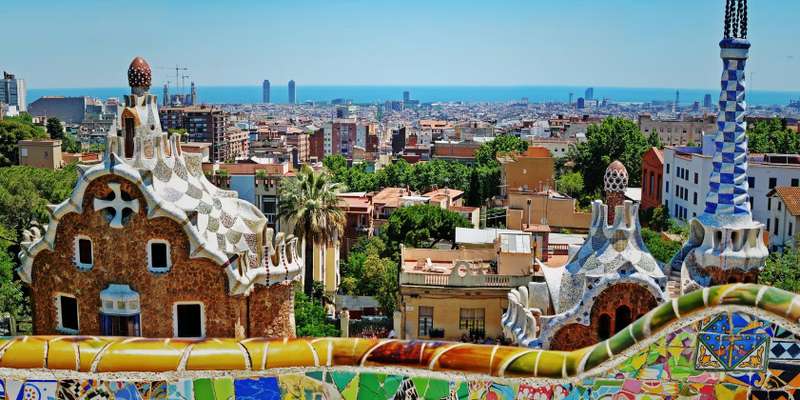
Most visitors rush through Gràcia to reach Park Güell’s mosaics, missing the neighborhood’s intimate modernist touches. Walk Carrer Verdi past independent shops to spot original 1900s pharmacy signs with sinuous typography, or peek into Casa Vicens’ lesser-known summer garden (Gaudí’s first house, with cheaper tickets than his famous works). The Plaça de la Vila de Gràcia still has its ornate modernist clock tower, where locals gather at the base café. For a free alternative to Park Güell’s paid monument zone, the surrounding Carmel neighborhood has equally panoramic views framed by parabolic arches, with street musicians adding to the bohemian vibe. Time your visit for late afternoon when the golden light enhances the district’s warm stone and brick facades.
View all Tours
Sant Pere – the industrial modernism most tours ignore
The Sant Pere district reveals modernism’s adaptation to Barcelona’s working-class roots, where textile factories became art nouveau showpieces. The Recinte Modernista de Sant Pau, a former hospital complex, offers quieter visits than central sites with its mosaic pavilions connected by underground tunnels. Nearby, the Mercat de Sant Antoni’s recent restoration uncovered magnificent ironwork and ceramic domes that survived decades hidden under tarps. These sites showcase how modernism served practical purposes – hospital courtyards designed for patient recovery, market halls maximizing natural light for vendors. The area’s affordable eateries let you refuel with Catalan classics while admiring period details most rush past. Come Wednesday or Sunday when the market’s outdoor book stalls add vintage charm.
View all Tours
How to access modernist interiors without breaking the bank
While Casa Batlló’s entry fees climb past €35, Barcelona offers smarter ways to experience modernist interiors. The Palau de la Música Catalana runs one-hour guided tours for €20 that include the stained-glass skylight and sculpted choir loft. Many Eixample buildings like Casa Thomas retain their original ground-floor shops – you can admire ceiling frescoes while ordering at El Nacional’s oyster bar. The city’s modernist museums (often free on first Sundays) preserve period furnishings; Museu del Modernisme Català displays Gaudí’s furniture alongside lesser-known designers. For budget-friendly guided context, the Barcelona Architecture Walk covers key buildings while explaining the political meaning behind the ornate flourishes. Save evenings for cocktail bars in modernist spaces like Casa Bonay’s lobby, where the ambiance costs nothing beyond your drink.
View all Tours
FAQ 2026
Do I need to book Sagrada Família tickets in advance for 2026?
Yes, due to the Gaudí Centennial in 2026, it is essential to book at least 2 to 4 weeks in advance. Tickets are exclusively digital and use strict 15-minute entry windows to manage the record-breaking crowds expected for the completion of the central Jesus Tower.
What is the new Barcelona tourist tax rate for 2026?
As of April 1, 2026, the city has implemented a scheduled increase to the municipal surcharge. Travelers should budget for a total combined tax (regional and city) of approximately €5.50 to €7.50 per person, per night, depending on the category of accommodation.
Are there special events for the Gaudí Centennial in 2026?
The 2026 program features over 1,500 activities, including nightly 'mapping' light shows on the facades of Casa Batlló, a major scientific retrospective at the Museu d'Història de Catalunya, and a global gathering of designers for the UIA World Congress of Architects in late June.
Written by Barcelona Tours Editorial Team & Licensed Local Experts.
Last updated: 24/02/26
