Navigating Barcelona's sprawling metro system can be overwhelming for first-time visitors, with 12 lines and 186 stations crisscrossing the city. A recent survey showed 68% of tourists waste over 30 minutes daily due to poor accommodation location choices, leading to unnecessary stress and missed reservations. Choosing the right neighborhood isn't just about proximity – it's about balancing transport links with local atmosphere, safety, and access to your must-see attractions. Many travelers unknowingly book hotels in areas requiring multiple metro transfers or long walks to stations, turning what should be a 15-minute journey into a 45-minute ordeal. This guide cuts through the confusion with hyperlocal insights on where to stay for seamless metro access while experiencing authentic Barcelona living.
Eixample: The grid of convenience for metro explorers
Eixample's wide boulevards hide a metro lover's paradise, with stations like Passeig de Gràcia (serving L2, L3, and L4) placing you minutes from Gaudí's masterpieces. The neighborhood's symmetrical grid layout means you're never more than 5 blocks from a station, yet it retains residential charm away from tourist crowds. Stay near Diagonal station for direct airport access via L9 Sud, or choose the quieter northern Eixample sector around Verdaguer station where two metro lines intersect. Unlike the Gothic Quarter's maze-like streets, Eixample's logical numbering system makes navigation foolproof – odd-numbered streets run parallel to metro lines for easy orientation. Morning commuters will appreciate bakeries near stations like Provença, where locals grab freshly baked ensaïmadas before hopping on the L6 or L7.
View all Tours
Gracia's village vibe with unexpected transport perks
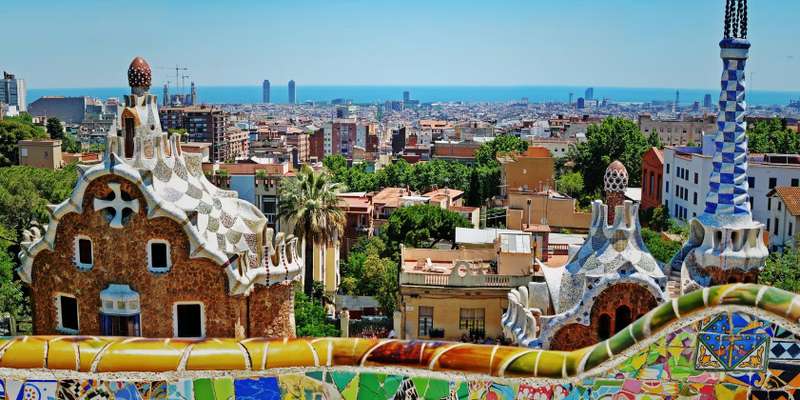
Don't overlook this bohemian enclave – Gracia's Fontana and Lesseps stations (L3) provide surprisingly efficient access to central Barcelona while offering respite from downtown bustle. The secret lies in the L3's diagonal route across the city, connecting you to Plaça Catalunya in 12 minutes without transfers. Late-night explorers benefit from Gracia's higher concentration of 24-hour metro stations compared to beachfront areas. Weekday mornings reveal a local trick: take the southbound L3 from Vallcarca station (near Park Güell's less crowded entrance) to avoid the crowds boarding at Diagonal. Those with heavy luggage should target hotels near Joanic station, where elevators make station access easier than at most Barcelona metro stops.
View all Tours
Poble Sec's budget-friendly metro gateway
This working-class neighborhood near Montjuïc delivers unbeatable value with Paral·lel station's dual L2 and L3 access – a rarity in Barcelona's metro network. The key advantage? Direct connections to both the airport (via L2 transfer at Paral·lel) and the Gothic Quarter (L3) without pricey downtown hotels. Night owls appreciate Poble Sec's proximity to L3's 24-hour weekend service, while families benefit from the funicular access to Montjuïc Castle at Paral·lel station. A little-known fact: hotels near Sant Antoni station (L2) place you midway between the beach and city center, with the added bonus of Mercat de Sant Antoni's Sunday book market just steps from your metro stop.
View all Tours
Avoiding metro mistakes: What tourists don't know
Barcelona's metro holds hidden complexities that foil even savvy travelers. The L9 Sud airport line requires separate tickets from urban routes, catching many off-guard during early departures. Stations like Sagrada Família see hour-long queues for ticket machines – purchase your T-casual 10-ride pass at quieter stops like Encants or Clot first. Beware 'metro deserts' near major attractions; the area around Camp Nou only has Collblanc station (L5), often overcrowded after matches. For beach access, L4's Barceloneta station is actually a 12-minute walk from the sand – better to stay near Ciutadella-Vila Olímpica station instead. Locals time their travel to avoid the 7:30-9:30am metro crush; if you must commute then, seek hotels near line terminuses like Trinitat Nova where you can board empty trains.
UPDATES FOR YEAR 2026
Seamless Travel: Digital Ticketing Mastery and Infrastructure Alerts
Barcelona's metro has transitioned to a fully digital, contactless ecosystem, making traditional magnetic stripe tickets obsolete. To use the popular T-casual 10-ride pass (now priced at €13.00), travelers must utilize the T-mobilitat system via a rechargeable contactless card or the official mobile app. For those staying in Gràcia or the Eixample Esquerra, be aware that the massive L8 extension and L9 central section projects are currently in their most intensive tunneling phases; expect localized street closures and construction activity near major hubs like Plaça Espanya, Hospital Clínic, and Gal·la Placídia. Logistically, while single tickets have risen to €2.90, the T-usual remains the best value for longer stays due to continued 50% state subsidies. Note that the L9 Sud airport link still requires a specific €5.90 surcharge, as the standard T-casual pass is not valid for airport entry or exit.
View all Tours
FAQ 2026
What is the cost of a T-casual 10-journey metro pass in Barcelona for 2026?
In 2026, the T-casual 10-journey pass for Zone 1 costs €13.00. This pass is individual (non-shareable) and must be loaded onto a T-mobilitat contactless card or the official app, as paper magnetic stripe tickets are no longer issued.
Are old paper magnetic tickets still valid on the Barcelona metro during 2026?
No, any remaining magnetic stripe tickets purchased in 2025 are only valid until February 28, 2026. After this date, all transit must be validated using the T-mobilitat contactless system, which includes rechargeable cardboard cards, plastic cards, or mobile NFC via the TMB app.
How does the L8 line extension affect travelers staying in Gràcia or Eixample in 2026?
Throughout 2026, major tunneling for the L8 and L9 projects is concentrated in the Gràcia and Eixample districts. Travelers should expect construction noise and pedestrian diversions near Plaça Espanya, Hospital Clínic, Francesc Macià, and the northern end of Via Augusta as new interchange tunnels are bored.
Written by Barcelona Tours Editorial Team & Licensed Local Experts.
Last updated: 24/02/26
